

Express HuntExpress Hunt
  • HOME
  • POLITICS
  • BRAND STORIES
  • OPINION
Search
  • Advertise
© 2022 Express Hunt . All Rights Reserved.
Reading: What remote sensing reveals abouts plants, forests and minerals from space
Share
Notification Show More
Latest News
Olivia turtle
Olivia ridley facing death concern as new nesting season begins
January 11, 2026
Rajnath Singh to commission new Coast Guard ship
January 11, 2026
US airstrikes in Venezuela and its impact on India
January 11, 2026
UAPA
Hierarchy of roles under UAPA
January 11, 2026
3D image of volcanoes
Scientists received first 3D images from volcano
January 11, 2026
Aa
Express HuntExpress Hunt
Aa
Search
  • HOME
  • POLITICS
  • BRAND STORIES
  • OPINION
Follow US
  • Advertise
© 2022 Foxiz News Network. Ruby Design Company. All Rights Reserved.
Home » Blog » What remote sensing reveals abouts plants, forests and minerals from space
News

What remote sensing reveals abouts plants, forests and minerals from space

Khushi Kumari
Khushi Kumari
Last updated: 2026/01/11 at 4:35 PM
Share
3 Min Read
remote sensing
remote sensing
SHARE

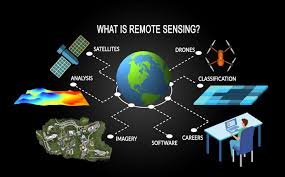
Remote sensing is the science of collecting information about the Earth’s surface without direct contact, using satellites, drones and aircraft mounted sensors. it works by detecting electromagnetic radiation(light) reflected or emitted by objects on earth. Humans see only visible light, but satellites can detect infrared, shortwave infrared, microwaves/radio waves, gravitational and magnetic variations. each material reflects energy differently as this unique reflection pattern is called a spectral signature (like a fingerprint).

Contents
BackgroundImportanceKey Index: NDVI

Background

There are two ways sensors see the world that is:

  • Passive Sensing: These sensors are like a standard camera. They wait for natural energy (like sunlight) to bounce off the Earth. If there is no sun (at night), they can’t “see” unless they are looking for heat (thermal).
  • Active Sensing: These sensors provide their own light source. For example, a Radar system sends out a pulse of energy and measures how long it takes to bounce back. Because they bring their own “flashlight,” they can see through clouds and work in total darkness.
  • The process generally follows these steps:
  • An Energy Source: Usually the Sun, which provides light.
  • Interaction: Sunlight hits an object (like a forest or a lake).
  • Reflectance: The object reflects some of that light back up toward the sky.
  • The Sensor: A satellite or drone captures this reflected light.
  • Data Processing: This captured data is sent to a computer on the ground and turned into an image or a map.

Importance

Remote sensing allows us to see the “big picture” that is impossible to view from the ground.

  • Agriculture: Farmers use satellite images to see which parts of their fields are thirsty or need more fertilizer long before the plants actually start to wilt.
  • Disaster Management: After a flood or earthquake, satellites provide instant maps of the damage, helping rescue teams find where help is needed most.
  • Weather Forecasting: Every time you check a weather app, you are looking at remote sensing data. It tracks clouds, storms, and rising ocean temperatures.
  • Climate Change: Scientists use it to monitor how fast glaciers are melting or how much of the Amazon rainforest is being lost each year.

Key Index: NDVI

  • NDVI (normailzed difference vegetation index) compares red light absorption and near infrared reflection.
  • High NDVI indicates healthy vegetation.
  • Low NDVI indicates stressed, diseased, or water deficient plants.

Healthy plants contain chlorophyll. it absorbs red light (for photosynthesis) and reflects near infrared light (for avoid overhead light).

https://expresshunt.in/niswarth-kadam-organises-hygiene-health-awareness-programme-for-underprivileged-women/

You Might Also Like

Olivia ridley facing death concern as new nesting season begins

US airstrikes in Venezuela and its impact on India

Rajnath Singh to commission new Coast Guard ship

Air force chief announced timely delivery of LCA Tejas

Scientists received first 3D images from volcano

TAGGED: environment, Express hunt, News, remote sensing
Khushi Kumari January 11, 2026
Share this Article
Facebook Twitter Whatsapp Whatsapp Email Copy Link Print
What do you think?
Love0
Sad0
Happy0
Sleepy0
Angry0
Surprise0
Wink0
Cry0
Previous Article ISRO satellite ISRO to launch earth observation satellite (EOS-N1) on January 12
Next Article SHANTI bill What does the SHANTI Bill change in India’s nuclear sector?
Leave a comment Leave a comment

Leave a Reply Cancel reply

You must be logged in to post a comment.

- Advertisement -
Ad imageAd image

Latest News

Olivia turtle
Olivia ridley facing death concern as new nesting season begins
News Opinion January 11, 2026
Rajnath Singh to commission new Coast Guard ship
News January 11, 2026
US airstrikes in Venezuela and its impact on India
News Opinion January 11, 2026
UAPA
Hierarchy of roles under UAPA
News January 11, 2026
Follow US

© 2022-2026 Express Hunt . All Rights Reserved.

  • About Us
  • Privacy Policy
  • Contact Us
  • My Bookmarks
  • Editorial Policy

Removed from reading list

Undo
Welcome Back!

Sign in to your account

Lost your password?
