

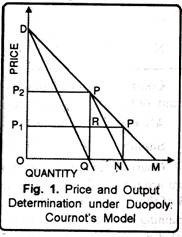
A duopoly is a market structure where only two firms dominate the supply of a particular commodity or services. these two firms together command major market share. the entry of new players is extremely difficult. The competition exists, but its limited and strategic. In simple terms, a Duopoly is a market situation where just two big companies control almost everything. While other smaller players might exist, these two “giants” hold so much power that they decide the prices, the quality, and the trends for the entire industry.
Background
The examples of the duopoly are Telecom: The Two-Horse Race, A few years ago, you had many choices (Vodafone, Idea, Aircel, Docomo). Today, after intense price wars and high costs, it is essentially Jio vs. Airtel. While Vodafone-Idea (Vi) exists, it has struggled to keep up with 5G rollouts. As of 2026, most Indian mobile users are choosing between these two, leading to rising recharge prices. and Food Delivery: The Orange and Red War, whether you are hungry at midnight or ordering lunch at work, you likely use Zomato or Swiggy. Together, they control nearly the entire market. Because there isn’t a third major rival, they can slowly increase “platform fees” or delivery charges without worrying about losing customers to someone else.
Importance
It isn’t a coincidence that these sectors have only two players. There are three main reasons:
- High Entry Cost (The “Entry Ticket”): Starting an airline or a telecom company requires billions of dollars. Most companies can’t afford the “ticket” to enter the game.
- Network Effects: The more people use a service, the better it gets. Since everyone is on Google Pay or PhonePe, a new payment app finds it very hard to convince people to switch.
- Survival of the Fittest: In the early stages, companies like Jio or Zomato spent huge amounts of money (burning cash) to offer discounts. Smaller companies couldn’t survive this “price war” and shut down, leaving only the two strongest standing.
pros and cons
A duopoly is a double-edged sword. It has benefits for the economy but often leaves the consumer with fewer options.
The Good Side:
- Stability: Two giant companies are less likely to go bankrupt than ten small ones. This ensures that services (like your internet or flights) don’t suddenly disappear.
- Innovation: To beat each other, the two giants often invest heavily in technology, like India’s rapid 5G rollout led by Jio and Airtel.
The Bad Side:
- Higher Prices: When there are only two players, they don’t need to fight as hard on price. You might notice “silent” increases in flight tickets or food delivery fees.
- Poor Customer Service: If you are unhappy with one, you only have one other place to go. If both have bad service, you are stuck.
- Less Choice: In a “Perfect Competition,” you might have 10 different types of services to choose from. In a duopoly, you get “Option A” or “Option B.”
The role of referee: CCI
In India, the Competition Commission of India (CCI) acts as the referee. Their job is to make sure these two giants don’t “team up” (collude) to keep prices high. If the giants stop competing and start cooperating, it hurts the country. The government is currently trying to encourage “Open Network” systems (like ONDC for shopping) to break these duopolies and give smaller businesses a chance.
https://expresshunt.in/pm-modi-gets-emotional-addressing-chandrayaan-3-heroes-in-bengaluru/