
Express HuntExpress Hunt
  • HOME
  • POLITICS
  • BRAND STORIES
  • OPINION
Search
  • Advertise
© 2022 Express Hunt . All Rights Reserved.
Reading: Prime Minister Modi to Address Trade Deficit with ASEAN at Indonesia Summit
Share
Notification Show More
Latest News
From Silicon Valleys to Indian Valleys: How One Engineer Built PushMyCart to Deliver India Across the Globe Special Feature
March 20, 2026
SheIVF: Empowering Patients with Reliable Information on IVF and Surrogacy in India
March 18, 2026
From Ideas to Impact: Discovering What You Can Write About
March 17, 2026
The Bhopal Shift: How Definite Success Classes Is Turning the City into India’s New NEET Preparation Hub
March 16, 2026
From Asansol to Global MediaTech: Jaswinder ‘Jassi’ Arora Breaks Boundaries, Inspiring a New Generation of Women in Technology
March 14, 2026
Aa
Express HuntExpress Hunt
Aa
Search
  • HOME
  • POLITICS
  • BRAND STORIES
  • OPINION
Follow US
  • Advertise
© 2022 Foxiz News Network. Ruby Design Company. All Rights Reserved.
Home » Blog » Prime Minister Modi to Address Trade Deficit with ASEAN at Indonesia Summit
Opinion

Prime Minister Modi to Address Trade Deficit with ASEAN at Indonesia Summit

Rudrakshi Gupta
Rudrakshi Gupta
Last updated: 2023/09/05 at 4:08 PM
Share
4 Min Read
Prime Minister Modi to Address Trade Deficit with ASEAN at Indonesia Summit
SHARE

Introduction

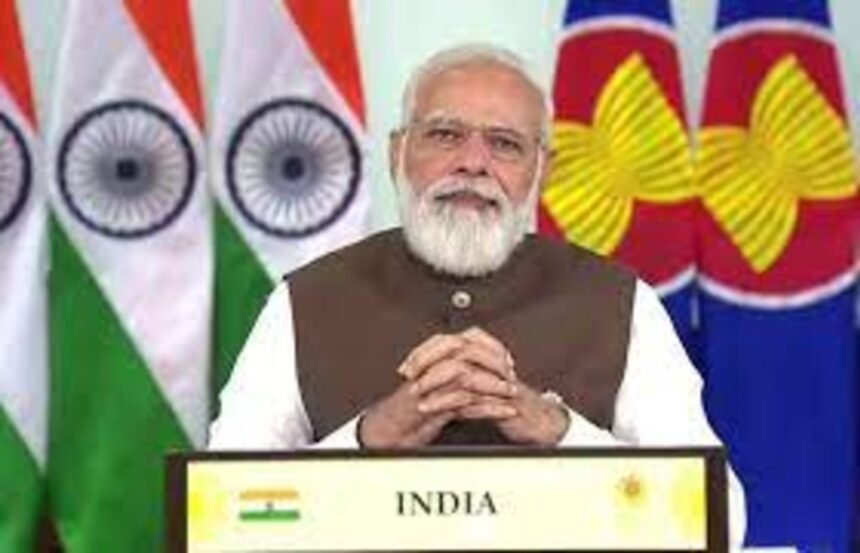
Prime Minister Narendra Modi is set to attend the 20th ASEAN-India Summit in Indonesia, where discussions about India’s significant trade deficit with the ASEAN bloc will take centre stage. This visit comes just days before India hosts the G20 Summit, highlighting the importance of addressing trade imbalances with its Southeast Asian neighbours.

Contents
IntroductionDriving factors of the deficitConclusion 
Prime Minister Modi to Address Trade Deficit with ASEAN at Indonesia Summit

The ASEAN bloc comprises ten nations, including Brunei, Myanmar, Cambodia, Indonesia, Laos, Malaysia, Philippines, Singapore, Thailand, and Vietnam. India’s trade deficit with these countries reached a staggering $43.57 billion in FY23, prompting the need for a review of the ASEAN-India Trade in Goods Agreement (AITIGA), which was originally signed in 2009.

Vinay Kumar, Deputy Secretary at the Union Commerce Ministry, emphasized India’s eagerness to hold at least one meeting to review the trade pact by year-end, with quarterly negotiations potentially following suit. Key focus areas for these discussions will likely include rules of origin, dispute settlement mechanisms, and chapters on safeguards.

Rules of origin, in particular, are expected to be a crucial point of debate, given concerns about Chinese goods being routed through some ASEAN countries. Tightening these rules is seen as essential to address such concerns and level the playing field for Indian industries.

Digitization of trade procedures and addressing non-tariff barriers, such as Sanitary and Phytosanitary (SPS) measures, will also be on the agenda. These measures are applied to protect human, animal, or plant life and can significantly impact trade.

Driving factors of the deficit

One of the driving factors behind India’s trade deficit with ASEAN countries is its increasing imports, primarily from Indonesia, Singapore, and Malaysia. Imports from these nations have surged in recent years, particularly in areas like mineral fuels, machinery, and vegetable fats and oils.

Several factors contribute to this trade imbalance, including multinational companies establishing bases in ASEAN countries under the ‘China plus one policy’ and India’s import of intermediate products from these nations under the Production Linked Incentive (PLI) scheme. This scheme offers incentives for domestic production.

The 2009 trade pact between India and ASEAN countries includes various tariff commitments, with “special products” like palm oil, coffee, tea, and pepper enjoying preferential tariff rates. Whether these tariff lines will be revised remains to be seen.

Annex 2 of the trade pact, detailing rules of origin, may also undergo tightening, especially concerning products that are “not wholly produced or obtained,” “minimal operations and processes,” and “indirect materials.”

Conclusion 

In conclusion, Prime Minister Modi’s visit to the ASEAN-India Summit in Indonesia signals India’s commitment to addressing its trade deficit with the ASEAN bloc. The discussions on trade pact revisions and various focus areas aim to create a more balanced and mutually beneficial trade relationship between India and its Southeast Asian partners.

You Might Also Like

Mardaani 3 that is Rani Mukerji’s return release date has been announced

Microscopic Crustacean from Kavarati that is Indiaphonte bijoyi with new genus

SRK reportedly took away a fan’s phone on stage

“Happy Patel” Vs “Rahu Ketu”

Cancel Culture: Accountability or Digital Mob?

TAGGED: India's trade defict, Indonesia summit
Rudrakshi Gupta September 5, 2023
Share this Article
Facebook Twitter Whatsapp Whatsapp Email Copy Link Print
What do you think?
Love0
Sad0
Happy0
Sleepy0
Angry0
Surprise0
Wink0
Cry0
Previous Article RBI's Forward-Looking Monetary Policy Approach RBI’s Forward-Looking Monetary Policy Approach
Next Article National Teacher's Day: Honouring the Unsung Heroes of Education Celebrating National Teacher’s Day: Honouring the Unsung Heroes of Education
Leave a comment Leave a comment

Leave a Reply Cancel reply

You must be logged in to post a comment.

- Advertisement -
Ad imageAd image

Latest News

From Silicon Valleys to Indian Valleys: How One Engineer Built PushMyCart to Deliver India Across the Globe Special Feature
Brand Stories March 20, 2026
SheIVF: Empowering Patients with Reliable Information on IVF and Surrogacy in India
Brand Stories March 18, 2026
From Ideas to Impact: Discovering What You Can Write About
Brand Stories March 17, 2026
The Bhopal Shift: How Definite Success Classes Is Turning the City into India’s New NEET Preparation Hub
Brand Stories March 16, 2026
Follow US

© 2022-2026 Express Hunt . All Rights Reserved.

  • About Us
  • Privacy Policy
  • Contact Us
  • My Bookmarks
  • Editorial Policy

Removed from reading list

Undo
Welcome Back!

Sign in to your account

Lost your password?
