


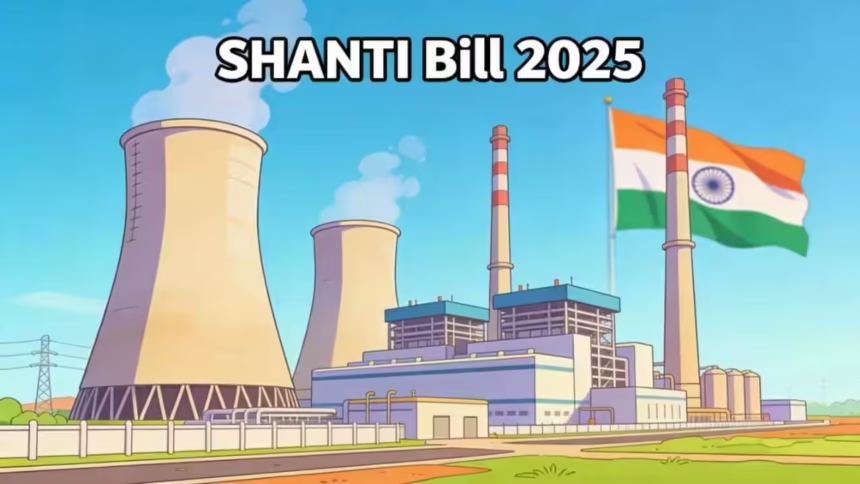
The sustainable harnessing and advancement of nuclear energy in India (SHANTI) bill is an overarching law that open India’s nuclear power sector to private and foreign participation, while retaining state control over strategic areas. It allows private Indian companies and joint ventures to own, build and operate nuclear power plants. It ends the monopoly of Nuclear Power Corporation of India Limited.
Background
For over 60 years, nuclear power in India was a government-only sector. Only the state-owned Nuclear Power Corporation of India Limited (NPCIL) could build and run plants. However, India has set a target to reach 100 GW of nuclear power by 2047 to achieve its “Net Zero” climate goals. The government realized that the state alone couldn’t provide enough money or speed to reach this goal. The SHANTI Bill was introduced to break this monopoly and invite private companies into the nuclear world.
Key features of this bill
Opening Doors to Private Players: The most historic change is that private Indian companies can now build, own, and operate nuclear power plants. Before this, private companies could only supply parts or help with construction. Now, they can be “operators,” though the government still keeps a close eye on them for national security
The bill simplifies the legal system by replacing two major old laws:
- The Atomic Energy Act, 1962 (which was very restrictive).
- The Civil Liability for Nuclear Damage Act, 2010 (which made it hard for foreign companies to work in India due to high risks).
In the past, if a nuclear accident happened, the companies that supplied the equipment could be sued. This made international companies afraid to sell technology to India. The SHANTI Bill moves the primary responsibility to the plant operator. It also sets a “cap” (a maximum limit) on how much an operator has to pay, making the financial risk predictable for investors.
The bill focuses on Small Modular Reactors. These are smaller, safer, and cheaper versions of traditional large nuclear plants. They can be built in factories and moved to sites like steel plants or data centers to provide steady, clean electricity.
The Atomic Energy Regulatory Board (AERB), which checks if plants are safe, has been given more power and “statutory status.” This means it is now a legally independent body that reports directly to Parliament, ensuring that safety is not compromised for profit.
Benefits and challenges
The Benefits:
- Clean Energy: It helps India move away from coal and reduce pollution.
- Energy Security: Unlike solar or wind, nuclear provides power 24/7.
- Investment: It opens up a new sector for billions of dollars in private and foreign investment.
The Challenges:
- Safety Concerns: Some critics worry that private companies might cut costs, which is dangerous in a nuclear setting.
- Transparency: The bill allows the government to keep certain information secret for national security, which some say could hide safety flaws.
In simple words, the SHANTI Bill is India’s way of saying “Nuclear energy is the future.” By allowing private companies to join and simplifying the rules, the government wants to build more plants faster. It balances the need for massive energy growth with strict safety oversight from a powerful regulator.
https://expresshunt.in/how-freegiftzone-is-changing-access-to-redeem-codes-on-google-play/