


For over seven decades, NATO’s promise that “an armed attack against one is an attack against all” has stood as a cornerstone of Western security. This assurance, enshrined in Article 5 of the North Atlantic Treaty. This has deterred aggression and knit together diverse democracies in Europe and North America.
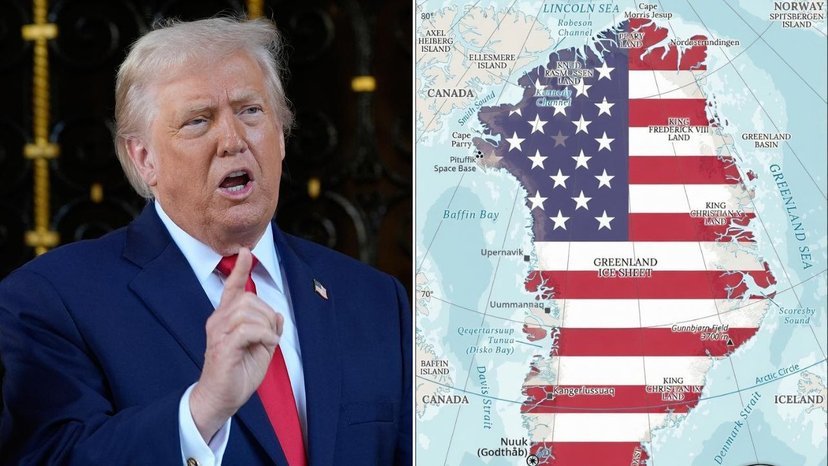
Yet today, the alliance faces an unusual and unprecedented test. A potential dispute between its strongest member, the United States, and another member over territorial sovereignty. At the centre of challenge is Greenland, an autonomous Danish territory positioned in the Arctic and long under NATO’s collective defence umbrella.
Himalayas Losing Their Snow Blanket: Alarm Bells for Climate & Water Security
What’s Happening with Greenland and Why It Matters
In early 2026, U.S. President Donald Trump reignited his controversial push to acquire Greenland. Citing national security concerns, particularly regarding Russia and China’s influence in the Arctic. Some statements have even suggested that military options could not be ruled out, a position that has alarmed Denmark, Greenland’s government, and European allies.
For Denmark’s leaders, any forced change in control over Greenland is not just unwelcome it is a direct attack on the territorial integrity of a NATO member. Such an act would contradict both international law and the alliance’s founding principles.
Why This Is Not Your Typical NATO Dispute
NATO was formed in 1949 with a clear purpose: to deter external threats and prevent war among its members. The alliance’s Article 5 clause has been invoked only once after the 9/11 terrorist attacks but that example highlighted how powerful collective defence can be when all members truly cooperate.
However, Article 5 was never designed to address a scenario where one ally threatens the territory of another. In cases of external threats, the framework holds strong. But if a leading member openly entertains the use of force against a fellow member’s territory, the alliance faces a normative and political crisis not just a military one.
Strains on Trust and Unity Within the Alliance
The current situation has highlighted several worrying trends:
- Silence from NATO leaders: While European govts. have publicly backed Denmark’s sovereignty, NATO’s official statements have been muted, causing unease among member states.
- Questions about U.S. commitment: If the U.S. is perceived as willing to threaten an ally’s territorial integrity, smaller members may doubt Washington’s future defence commitments.
- Alliance credibility at stake: If internal disputes override the pact’s collective defence ethos, potential adversaries could exploit divisions.
What Comes Next for NATO?
This moment presents NATO with a critical choice: treat the Greenland dispute as a short-lived political issue or recognise it as a deeper threat to alliance cohesion. The former risks emboldening internal divisions; the latter requires robust diplomatic engagement and a clear reaffirmation of mutual respect for sovereignty.
If resolved through dialogue and cooperation respecting Denmark’s autonomy and Greenland’s current status NATO could emerge stronger and more unified. But if the dispute escalates or is left unaddressed, it may prompt smaller members to explore alternative security arrangements, weakening the collective defence framework that has underpinned transatlantic security for decades.