


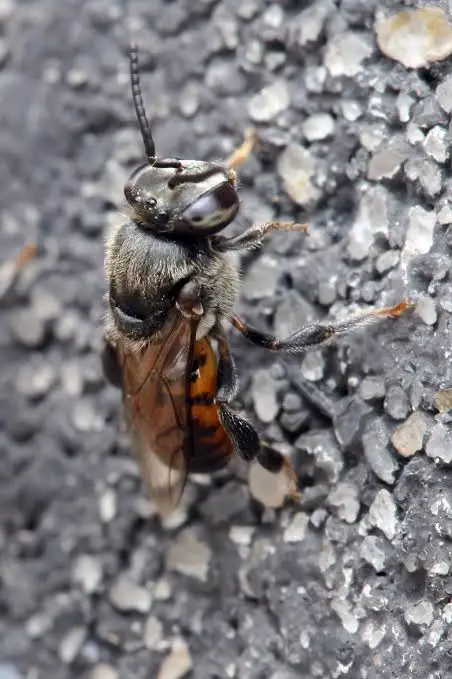
In a landmark development, Amazon’s stingless bees have become the first insect to be granted legal rights, reflecting a global shift towards rights of nature jurisprudence. this decision recognizes their irreplaceable ecological role in sustaining tropical ecosystems. Stingless bees, often called Meliponines, are the “gentle architects” of the insect world. While the common European honeybee gets most of the spotlight, these 600+ species have spent millions of years quietly sustaining the world’s most diverse ecosystems.
Ecology
Found in tropical and subtropical regions like the Amazon, Africa, and Southeast Asia, stingless bees are essential to the planet’s health. Unlike honeybees, which are often generalists, many stingless bee species have evolved to pollinate specific native plants that other insects cannot.
- Diverse Homes: They nest in hollow trees, underground cavities, or even abandoned termite mounds.
- Unique Architecture: Instead of the hexagonal wax combs we usually see, they build “honey pots” out of a mixture of beeswax and plant resin called cerumen.
- Liquid Gold: They produce a distinct, tangy honey that is thinner than regular honey and highly prized for its medicinal properties.
Because they are “stingless” (their stingers are physically reduced and non-functional), they defend their hives by biting, crawling into an intruder’s ears/nose, or secreting sticky resins to immobilize threats.
Evolution
Stingless bees are some of the oldest bee species on Earth. Fossil evidence in amber suggests they have existed for over 100 million years, dating back to the Cretaceous period when dinosaurs still roamed.
They evolved alongside the first flowering plants, creating a biological partnership that has lasted for eons. Interestingly, while they share a common ancestor with honeybees, stingless bees evolved their complex social structures including queens, workers, and drones independently. This makes them a “masterpiece” of parallel evolution, proving that highly organized society is a winning strategy for survival.
Legal Rights
For centuries, stingless bees have been spiritually and economically vital to Indigenous communities, such as the Maya in Mexico and the Asháninka in Peru. However, modern threats like deforestation, toxic pesticides, and climate change have pushed many species toward extinction.
In a historic move in late 2025, the legal landscape for these insects changed forever:
- Rights of Nature: Two regions in the Peruvian Amazon (Satipo and Nauta) became the first in the world to grant legal rights to stingless bees.
- Legal Subjecthood: This means the bees are no longer seen as “property” or “pests,” but as “rights-bearing subjects.” They now have the legal right to exist, to flourish, and to live in a healthy environment.
- Representation: Since bees cannot speak in court, the law allows human “guardians” including Indigenous leaders and scientists to file lawsuits on behalf of the bees against polluters or companies destroying their habitats.
Stingless bees are more than just honey producers; they are ancient survivors that are now leading a global movement to redefine how the law protects the natural world.