


A recent analysis by the Center for Research on Energy and Clean Air (CREA) has highlighted that around one third of Delhi’s annual PM2.5 pollution comes from secondary pollutants, with ammonium sulphate being the dominant contributor. This finding is crucial because it shifts policy focus from only controlling visible emission sources to also managing chemical reactions in the atmosphere.
Background
While primary pollutants are emitted directly from a source, secondary pollutants are “born” in the air through chemical reactions. In Delhi, these “hidden” particles can account for 30% to 50% of the total PM2.5 mass during the peak winter months.
Think of air pollution like a recipe.
- Primary Pollutants are the raw ingredients (like Sulfur Dioxide from a power plant or Ammonia from a farm).
- Secondary Pollutants are the finished dish that forms when those ingredients cook together in the atmosphere.
In scientific terms, these are called Secondary Inorganic Aerosols (SIA). They form when precursor gases like Sulfur Dioxide, Nitrogen Oxides, and Ammonia react with water vapor and sunlight to transform from invisible gases into solid, microscopic particles.
The “Big Three” in Delhi’s Air
Research from 2024 and 2025 by groups like the Centre for Research on Energy and Clean Air (CREA) has highlighted three main culprits that drive Delhi’s secondary PM2.5 levels:
- Ammonium Sulfate: This is the biggest contributor. It starts as sulphate (mostly from coal-fired power plants) and reacts with ammonia to form a sticky, fine powder that stays in the air for days.
- Ammonium Nitrate: This forms when nitrogen (mostly from vehicle exhaust) reacts with ammonia. It is particularly high during the cold winter mornings.
- Secondary Organic Aerosols (SOA): These form when fumes from fuels and paints (Volatile Organic Compounds) “oxidize” in the sun, turning into a toxic mist.
Crisis
The secondary pollutant problem makes Delhi’s air quality exceptionally difficult to manage for three main reasons:
1. The Winter “Chemical Lab”
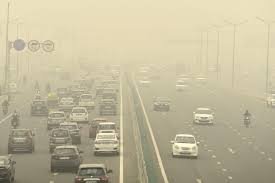
Delhi’s winter weather is the perfect incubator for these reactions. High humidity, heavy fog, and “temperature inversion” (where cold air traps pollutants near the ground) act like a lid on a pot. In these damp, stagnant conditions, the chemical conversion of gases into particles happens much faster sometimes within just a few hours.
2. The Transboundary Trap
Primary pollutants like road dust usually stay near the source. But the gases that create secondary pollutants can travel hundreds of kilometers. This means even if Delhi shut down every factory inside the city, from power plants in neighboring states or ammonia from fertilizers in Punjab and Haryana could still drift into the city and turn into PM2.5 right above the Red Fort.
3. The Health Hazard
Because secondary particles are formed through chemical reactions, they are often incredibly small much smaller than the 2.5-micron limit. This allows them to bypass the body’s natural filters, entering the bloodstream and traveling to the heart and brain, leading to long-term respiratory and cardiovascular issues.
How to fix it?
For years, Delhi’s “Graded Response Action Plan” (GRAP) has focused on visible sources: stopping construction, banning trucks, and sweeping roads. While important, these don’t stop the chemical reactions happening in the sky.
To solve the PM2.5 crisis, experts suggest we must move beyond the city limits:
- Mandating FGDs: Installing “Flue Gas Desulphurization” units in all coal power plants within a 300km radius to stop at the source.
- Managing Ammonia: Improving fertilizer use in North India’s “breadbasket” to reduce ammonia emissions.
- Regional Cooperation: Treating the entire Indo-Gangetic Plain as one “airshed” rather than managing Delhi as an isolated island.
Delhi’s “smog” isn’t just smoke and dust; it is a complex chemical soup. Until we address the invisible gases that create secondary pollutants, the city’s PM2.5 levels will remain dangerously high, even on days when the streets look clear.
https://expresshunt.in/amit-shah-condemns-dmk-leaders-remark-on-sanatana-dharma/