


Introduction: A Trailblazer in Mathematics Takes Global Stage
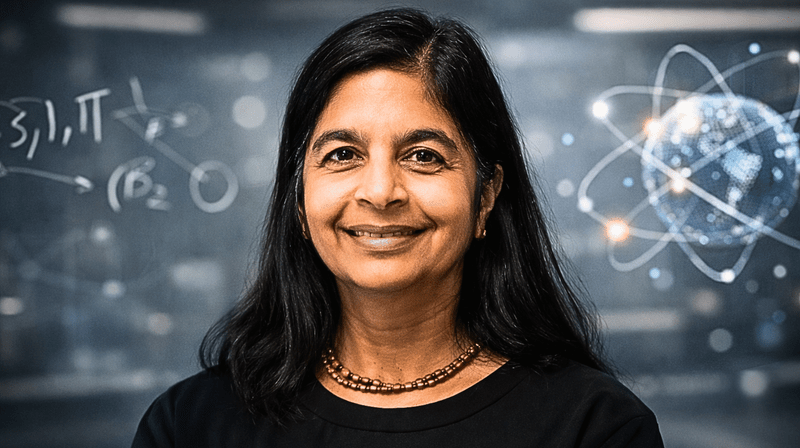
Indian‑origin mathematician Professor Nalini Joshi has been crowned the 2025 New South Wales (NSW) Scientist of the Year. She made history as the first mathematician ever to receive this top scientific honor in Australia. This recognition not only celebrates her groundbreaking work in advanced mathematics but also highlights her visionary insights into the future of technology. And the most notably her prediction that “quantum money” could be commonplace within the next 20 years.
Inside X’s Open-Source Turn: Elon Musk to Publish Full Algorithm in 7 Days
Who Is Nalini Joshi?
Professor Joshi’s academic journey and professional accomplishments read like an inspiring blueprint for young scientists. She was born to an Indian‑origin family and educated in Australia. She rose through rigorous academic ranks to become the Chair of Applied Mathematics at the University of Sydney. There she continues to push the boundaries of mathematical science. Her research spans integrable systems, climate modeling, fibre‑optic communications, and the emerging field of quantum cryptography.
The Quantum Money Prediction: What It Means
One of Joshi’s most talked‑about insights is her projection that humanity could be using quantum money a new form of currency . Traditionally, money has taken many forms: from barter and metal coinage to paper notes and digital currencies. Quantum money, however, is a concept rooted in the principles of quantum mechanics and cryptography.
In the era of quantum computing, encrypted data could be rendered vulnerable by machines capable of solving complex problems Quantum money, secure by design and potentially impossible to forge due to the very laws of physics, represents a paradigm shift in how we may secure financial transactions and digital assets in the future.
Beyond the Prediction: Impact & Inspiration
Professor Joshi’s achievement as NSW Scientist of the Year is also significant for representation in STEM. She is a vocal advocate for women and minority groups in science.
Her story sends a powerful message: foundational sciences like mathematics often seen as abstract are central to technological revolutions that will shape everyday lives.