


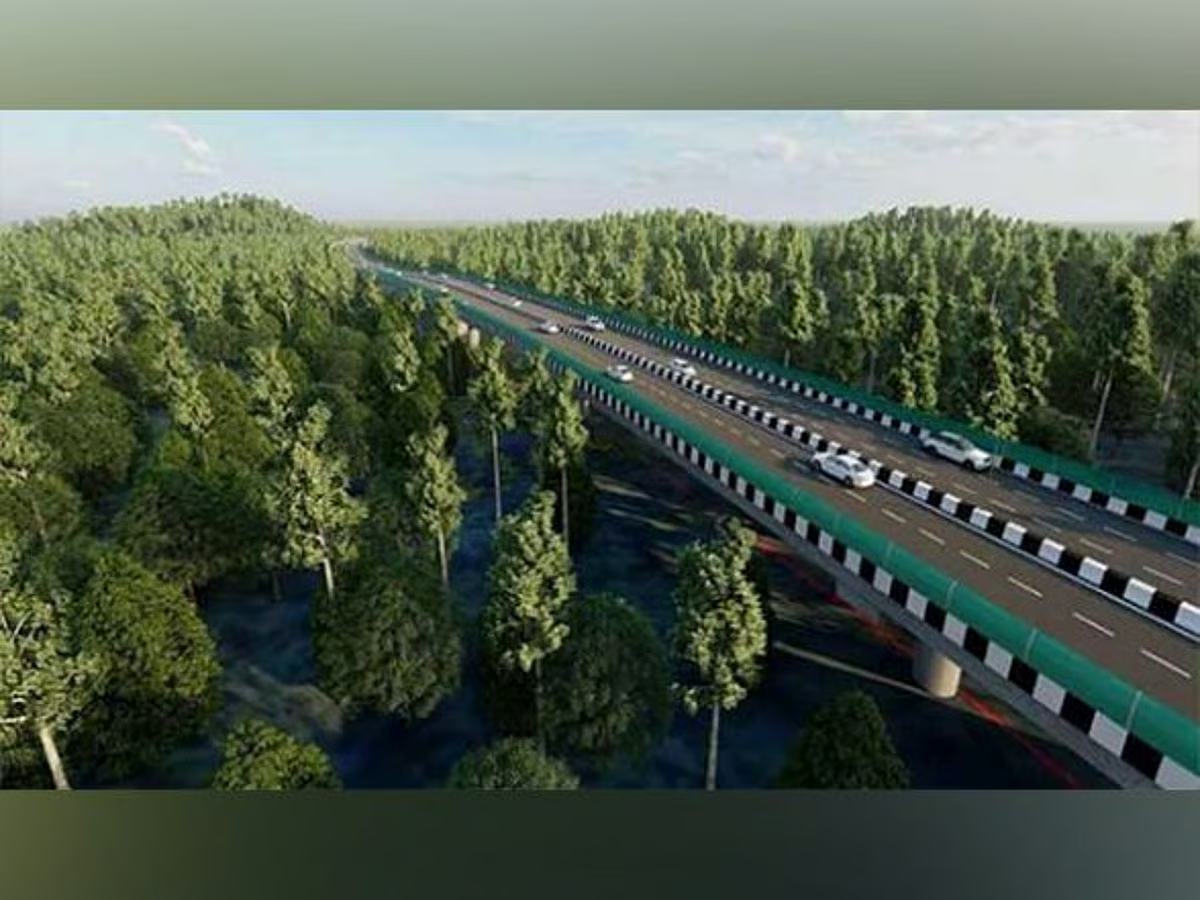
The Kaziranga National Park in Assam is a world-renowned treasure. It houses the world’s largest population of one-horned rhinoceroses and provides a home to elephants, tigers, and wild buffalo. However, a major challenge has long threatened this delicate ecosystem: National Highway 715 (formerly NH-37). This busy road cuts right through the park’s southern boundary, creating a dangerous barrier for animals. To solve this, the Indian government has launched the Kaziranga Elevated Corridor, a landmark infrastructure project designed to let nature and modern transport coexist.
Importance
Every year, the Brahmaputra River overflows its banks and floods the plains of Kaziranga. This is a natural and necessary cycle for the wetlands, but it forces thousands of animals to seek higher ground in the Karbi Anglong Hills to the south. To reach safety, these animals must cross the existing ground-level highway.+2
Tragedy often strikes during these migrations. Speeding trucks and cars frequently hit animals, leading to hundreds of wildlife deaths annually. Furthermore, the heavy traffic creates noise and pollution that disturbs the natural habitat. For humans, the narrow two-lane road causes massive traffic jams and safety risks. The new elevated corridor addresses all these problems by literally lifting the road above the forest floor.
Project detail and design
On January 18, 2026, Prime Minister Narendra Modi laid the foundation stone for this ambitious project in Kaliabor, Assam. The project costs approximately ₹6,957 crore and covers a total stretch of about 86 kilometers between Kaliabor and Numaligarh.+1
The centerpiece of this plan is a 35-kilometer-long elevated section. Engineers have designed this “bridge” to pass through nine identified animal corridors. By raising the highway, the project creates a massive underpass where rhinos, elephants, and tigers can walk freely without ever encountering a vehicle.
Besides the elevated bridge, the project includes widening 30 kilometers of the existing road and building 21 kilometers of new bypasses. These bypasses will route heavy traffic away from crowded towns like Jakhalabandha and Bokakhat, making life easier for local residents.
Benefits for wildlife and people
The primary goal of the corridor is conservation. By removing vehicles from the ground level, the project restores the ancient migratory paths of the animals. It essentially reconnects the Kaziranga floodplains with the Karbi Anglong hills, creating a seamless landscape for wildlife.+2
However, the benefits extend far beyond the forest:
- Faster Travel: The new four-lane system will reduce travel time between Lower and Upper Assam by at least one hour.
- Economic Growth: Better roads connect local farmers and artisans to bigger markets. It also strengthens links to industrial hubs like the Numaligarh Refinery.
- Tourism Boost: A safer, more scenic route will likely attract more eco-tourists to the region, creating jobs for local youth in the hospitality and guiding sectors.
- Road Safety: Separating fast-moving traffic from wildlife and local pedestrians will significantly reduce the number of accidents.
Sustainable development
The Kaziranga Elevated Corridor serves as a global model for “green infrastructure.” It proves that we do not have to choose between protecting the environment and building a modern economy. By using scientific recommendations from the Wildlife Institute of India, the government ensures that the construction minimizes noise and disturbance to the animals.
As work begins, the people of Assam look forward to a future where the roar of a car engine no longer signals danger for the rhino. Instead, travelers will cruise high above the canopy, while below, the “soul of Assam” continues to thrive undisturbed. This project doesn’t just build a road; it builds a bridge to a more sustainable future.
Kraft-Obench: Redefining Workspaces and Innovating Remote Solutions – A Vision Realized by Founders Divya Sanghvi and Ishaan Saxena.