

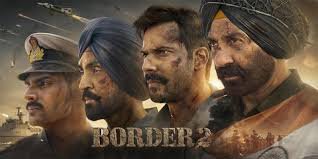
In the world of Indian cinema, few names carry as much weight as Javed Akhtar. Known for his piercing lyrics and legendary screenplays, Akhtar has always prioritized art over commerce. This week, the veteran lyricist made headlines by officially refusing to write for Border 2, the highly anticipated sequel to the 1997 war epic. His reason is simple but profound: he refuses to participate in what he calls “creative bankruptcy.”
The Stand Against Recreations
The controversy began when the makers of Border 2 released the song “Ghar Kab Aaoge,” a rehashed version of the iconic “Sandese Aate Hain.” While the original song penn Akhtar is consider a national anthem for soldiers.
In a candid interview on January 20, 2026, Javed Akhtar revealed that the producers did approach him to write the lyrics for the sequel. However, he turned them down immediately.
“I really feel this is a kind of intellectual and creative bankruptcy,” Akhtar stated. “You have an old song that did well, and you want to put it out again by adding something? Make new songs, or else accept that you cannot do the same level of work.”
A Lesson from the Past
To explain his decision, Akhtar pointed to history. He recalled that when he wrote for the original Border in 1997, he and director J.P. Dutta already had a legendary benchmark: the 1964 war film Haqeeqat. That film featured timeless tracks like “Kar Chale Hum Fida.”
Instead of taking the easy route and remixing those classics to guarantee a hit, Akhtar and composer Anu Malik chose to create something entirely new. The result was a soundtrack that defined a generation. Akhtar argues that if filmmakers today want to capture the “magic” of the past, they must create “new nostalgia” rather than recycling old glory.
The Industry’s “Bankruptcy”
Akhtar’s refusal highlights a growing tension in Bollywood. In recent years, the industry has leaned heavily on sequels, remakes, and remixes. While these projects often bring in money, Akhtar believes they signal a decline in original thought. By saying “no” to Border 2, he is challenging modern creators to push themselves harder.
His words have sparked a massive debate online. Many fans of the original film agree, noting that the “soul” of the 1997 songs came from their original poetry. By refusing to “rewrite” his own masterpieces, Akhtar is protecting his legacy and demanding a higher standard of work from the new generation of filmmakers.
Nepal’s COVID-19 Battle: A Look at Recent Trends and Regional Variances