

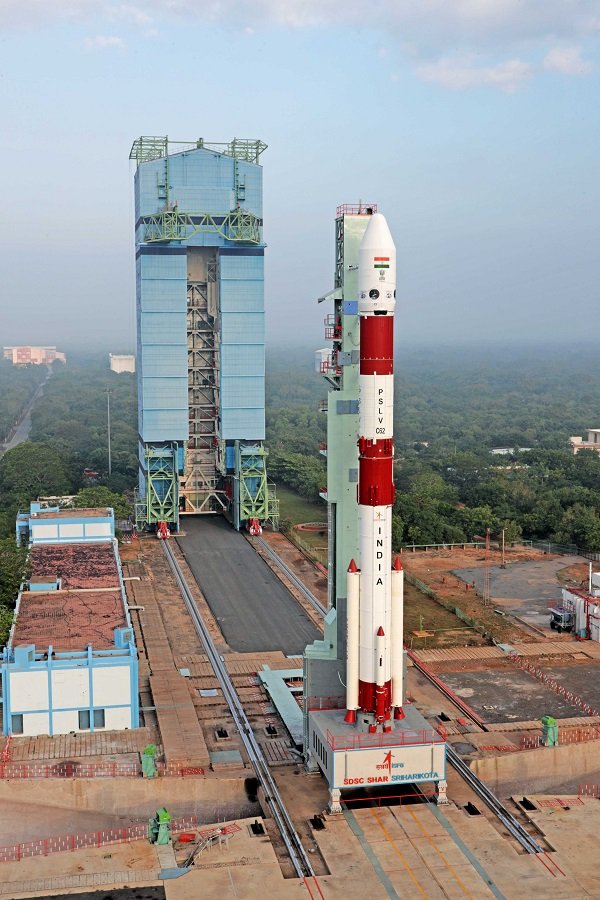
The Indian Space Research Organization (ISRO) is set to kick off 2026 with a significant milestone. On January 12, 2026, the space agency will launch the PSLV-C62 mission, therefore carrying the EOS-N1 (Earth Observation Satellite-N1) as its primary payload.
The launch is scheduled for 10:17 AM IST from the First Launch Pad at the Satish Dhawan Space Centre in Sriharikota. This mission is particularly noteworthy as it marks ISRO’s first orbital flight of the year and the return of the “workhorse” Polar Satellite Launch Vehicle (PSLV) following a technical glitch in mid-2025.
EOS-N1
The EOS-N1, also codenamed Anvesha, is a sophisticated imaging satellite developed primarily for the Defense Research and Development Organization (DRDO). While many of ISRO’s Earth observation satellites focus on civilian needs like weather forecasting, EOS-N1 is designed for strategic and national security purposes.+1
The satellite’s standout feature is its hyperspectral imaging capability. Unlike standard cameras that see only primary colors, hyperspectral sensors can “see” across hundreds of narrow wavelengths of light. This allows the satellite to identify the chemical composition of objects on the ground, making it possible to peer through camouflage, detect hidden assets, and monitor border activities with unprecedented precision.+2
Beyond its military utility, the data from EOS-N1 will also support:
- Agriculture: Monitoring crop health and soil quality.
- Urban Mapping: Planning infrastructure and tracking land use.
- Environmental Tracking: Monitoring changes in forest cover and water bodies.
Why this mission matter?
This launch carries high stakes for ISRO. In May 2025, the PSLV-C61 mission fails to place its satellite into orbit due to an anomaly in the rocket’s third stage. Since then, engineers are worked tirelessly to rectify the issue. A successful flight on January 12 will restore full confidence in the PSLV, which has been the backbone of India’s space program for decades.
Furthermore, the inclusion of several private Indian startups like Dhruva Space and OrbitAID signals the maturing of India’s “New Space” ecosystem. By providing a platform for experimental technologies like orbital refueling and edge computing. ISRO is helping turn India into a global laboratory for space innovation.
How to watch?
For space enthusiasts, ISRO has opened registrations for the Launch View Gallery at Sriharikota. Citizens can witness the roar of the PSLV firsthand by registering on the official portal (lvg.shar.gov.in). For those at home, the launch will be live streamed on ISRO’s official website and social media channels.
As the countdown begins, all eyes are on the launch pad. The success of EOS-N1 will not only strengthen India’s national security but also set a triumphant tone for the country’s ambitious space schedule in 2026.