


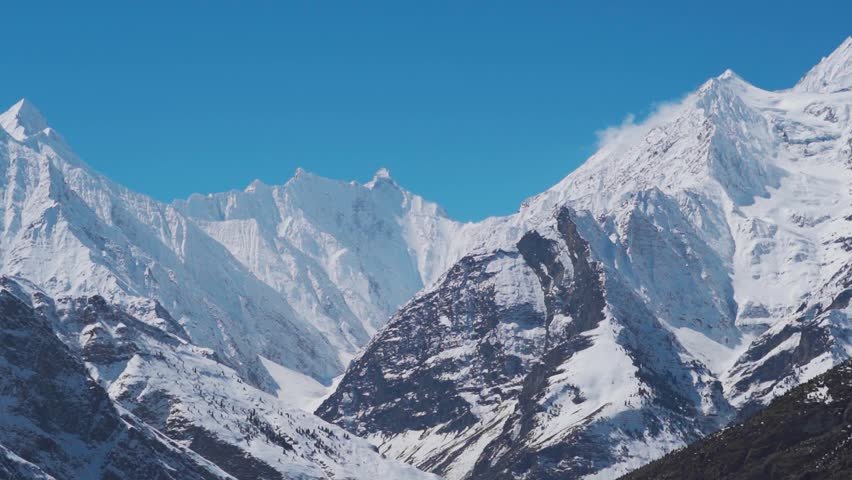
For centuries, the Himalayas have stood tall as a snow‑clad natural fortress a source of rivers, cultural identity, and ecological balance. But this winter, scientists and meteorologists are raising serious concerns: vast portions of the Himalayan range are unusually bare and rocky, with significantly reduced winter snowfall observed across key regions. This shift is not only altering the timeless beauty of the mountains but also triggering critical environmental and socio‑economic alarms across South Asia
Snow Drought: What Is Happening to Himalayan Winters?
Recent observations by climate scientists and meteorological departments indicate a sharp decline in winter precipitation both snow and rain across the Himalayas. In the western and central Himalaya zones, snowfall has dropped markedly compared to historical averages from 1980–2020. Experts describe the phenomenon as a “snow drought” where winter snow becomes scarce or nearly absent.
The International Centre for Integrated Mountain Development (ICIMOD) reports that snow persistence the amount of time snow remains on the ground has fallen by nearly 24 % below normal in recent winters. This change reflects the lowest levels in over two decades and has continued for several consecutive years.
Causes: Climate Change & Weakening Winter Systems
Scientists point to a combination of factors driving this worrying trend. Rising global temperatures due to climate change accelerate snowmelt and reduce overall precipitation. At the same time, traditional weather systems such as western disturbances that historically supplied moisture to northern India and Himalayan regions have weakened or shifted, lessening their snow‑producing potential.
These conditions have contributed to a warmer and drier winter pattern, with less snow forming at lower and mid‑elevations and melting quickly even where it does fall. This disruption of normal winter weather cycles is emerging as more than a short‑lived anomaly.
Far‑Reaching Impacts: Water, Wildlife & Local Livelihoods
Snow in the Himalayas is not just scenery it functions as a natural water reservoir, feeding rivers such as the Ganges, Brahmaputra, and Indus, which support hundreds of millions of people downstream. Snowmelt contributes roughly one‑fourth of total annual runoff in these basins. Reduced snowfall threatens to diminish seasonal water supplies, affecting agriculture, drinking water, and hydroelectricity.
AirThe ecological impacts are equally severe. Alpine plants, including vital medicinal species like jatamansi and kutki, rely on snow cover for protection and moisture. With insufficient snow insulation, these species face stunted growth or possible local decline.
What This Means for the Future
The transformation from snow‑clad peaks to bare, rocky slopes underlines a stark reality: climate change is reshaping the Himalayas in real time. As winters warm and precipitation patterns shift, the region’s delicate environmental balance and the billions of lives connected to it face mounting uncertainty.