


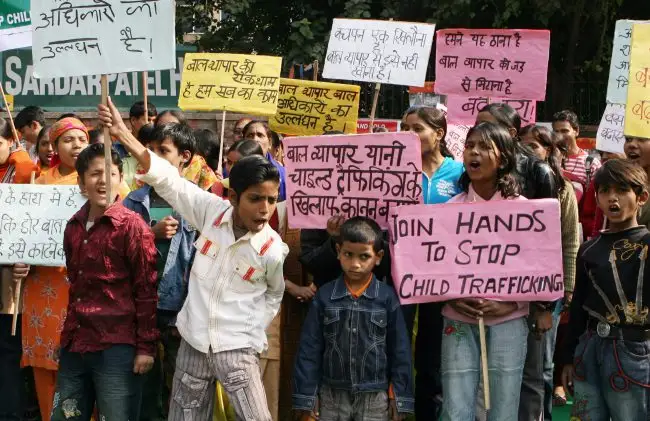
Child trafficking is a shadow that looms over the lives of thousands of vulnerable children in India. Every year, traffickers lure children away from their homes with false promises of education, jobs, or a better life. Instead, these children end up in forced labor, domestic servitude, or the dark world of sexual exploitation. Handling this crisis requires more than just laws; it demands a collective, active response from every citizen, community leader, and government official.
Power of Vigilance and Reporting
The most effective way to handle child trafficking is to stop it before it happens. Vigilance serves as our first line of defense. Traffickers often target railway stations, bus stands, and crowded marketplaces. If you see a child who looks distressed, travels with an adult who seems unrelated, or shows signs of physical abuse, you must act.
India has a dedicated lifeline for children in distress: CHILDLINE 1098. This 24-hour, free emergency phone service connects children to a network of NGOs and government agencies.
Important Numbers: > * 1098: National Child Helpline (Childline)
- 112: Emergency Response Support System (ERSS)
- 1800-102-7222: Bachpan Bachao Andolan (BBA) Complaint Cell+1
When you report a suspicious case, the authorities can launch a rescue operation. Remember, your one phone call could literally save a life.
Legal Shield
India possesses a robust legal framework designed to punish traffickers and protect victims. Knowing these laws empowers citizens to demand justice.
- The Juvenile Justice (JJ) Act, 2015: This is the primary law for the care and protection of children. It treats trafficked children as “children in need of care and protection” rather than criminals.
- Article 23 of the Constitution: This article strictly prohibits human trafficking and forced labor.
- The POCSO Act, 2012: This law provides a special mechanism to protect children from sexual abuse and exploitation, which are often the end goals of trafficking.
- Section 370 of the IPC: This section specifically defines trafficking as an organized crime and sets heavy penalties, including life imprisonment for those who traffic minors.
Community Prevention
Communities hold the key to ending trafficking. Since 90% of trafficking in India is internal (within the country), local “vigilance committees” in villages and urban slums can make a massive difference.+1
- Education as a Shield: Schools must teach children about “Good Touch and Bad Touch” and how to recognize the tactics traffickers use.
- Monitoring Dropouts: Local leaders should track school dropout rates. A child who stops coming to school is at a high risk of being pushed into labor or marriage.
- Economic Support: Poverty is the biggest recruiter for traffickers. By helping families access government schemes like MNREGA or food subsidies, we reduce the desperation that leads parents to trust strangers with their children