


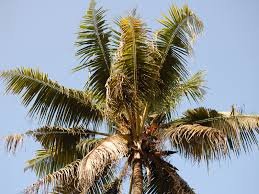
Coconut palms are the “Trees of Life” for millions of farmers in southern India. However, a silent and stubborn enemy called Coconut Root Wilt Disease (RWD) currently threatens these vital plantations. First reported in Kerala over 150 years ago, this disease has now spread across Karnataka and Tamil Nadu, affecting more than 30 lakh palms. While it doesn’t kill the tree instantly, it slowly drains its energy, leaving farmers with empty pockets and weakened groves.
Cause of diseases
Scientists have identified a tiny, bacteria-like organism called phytoplasma as the main culprit. Unlike common fungi, this germ lives deep inside the plant’s “veins” (the phloem), where it blocks the flow of essential nutrients and water.
Because the phytoplasma stays hidden inside the tree, it spreads through “couriers.” Small, sap-sucking insects like the lace bug and plant hopper drink the juice of an infected tree and carry the germ to healthy ones. Wind and crowded plantations make it even easier for these insects to travel.
Symptoms
Farmers must watch their trees closely, as early detection is key. The disease reveals itself through three main “warning signs”:
- Flaccidity (Leaf Drooping): This is the most reliable sign. The small strips of the leaf (leaflets) lose their stiffness and curve inward. They look like the ribs of an animal or a half-open umbrella.
- Yellowing: The older, outer leaves turn a bright yellow, starting from the tips and moving toward the middle.
- Necrosis (Drying): Eventually, the edges of the leaves turn brown and dry up.
As the disease progresses, the tree’s roots begin to rot. The tree produces fewer flowers, and the nuts it does grow are small, with thin husks and watery, tasteless kernels. In advanced stages, the top of the trunk might even start to taper or get thin.
Economic Impact
Root Wilt Disease is “debilitating,” meaning it makes the tree weak and unproductive. An infected palm can see a yield drop of 40% to 75%. This loss ripples through the entire rural economy:
- Copra and Oil: The quality of the oil drops, and the copra stays soft and rubbery.
- Coir Industry: Because the husks become thin and weak, the fiber is no longer suitable for making high-quality mats or ropes.
- Intercropping: Many farmers grow cocoa or pepper under the shade of coconut trees. When the coconut canopy thins out due to wilt, these smaller crops die from too much sun.
Managing the wilt
There is currently no “magic cure” to completely erase the phytoplasma once it enters a tree. However, farmers can manage the disease and keep their farms profitable by following an Integrated Management approach.
1. Removal of “Hotspots”
If a tree is very young or yields fewer than 10 nuts a year, it acts as a “virus factory” for the rest of the farm. Farmers should remove these severely affected palms immediately to stop the spread.
2. Strengthening the Tree (Nutrition)
A healthy tree fights disease better. Use this “energy boost” recipe per palm, per year:
- Urea: 1.3 kg
- Super Phosphate: 2.0 kg
- Muriate of Potash: 3.5 kg
- Magnesium Sulphate: 1.0 kg (This is vital to stop leaf yellowing).
3. Organic Care and Irrigation
Apply 50 kg of compost or cow dung and 5 kg of neem cake to each palm every year. During the dry summer months, give each adult palm about 250 liters of water per week. Adding green manure crops like cowpea in the basins also improves soil health.
4. Controlling the Vectors
To stop the insects from spreading the germ, treat the leaf axils (where the leaf meets the trunk). A mixture of neem cake and sand or specific recommended insecticides can keep the lace bugs away.