


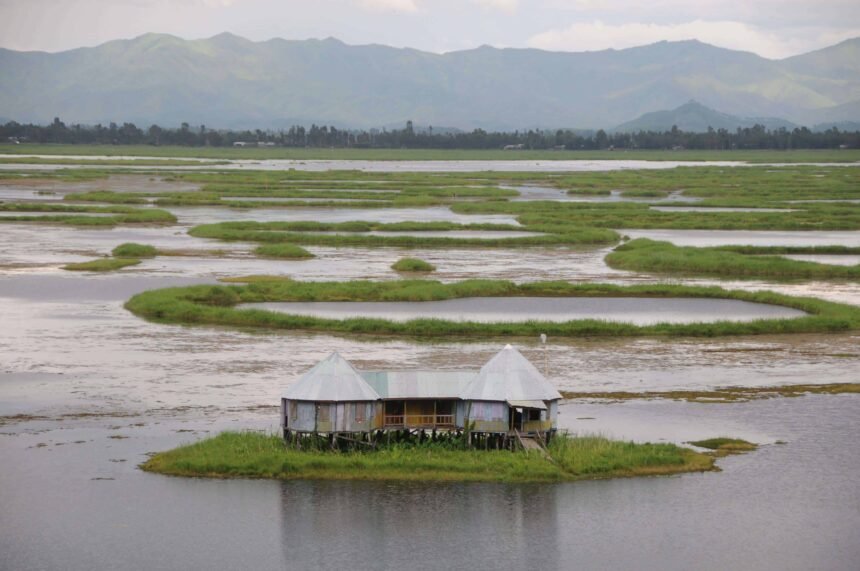
Tucked within the serene waters of Loktak Lake in Manipur, Northeast India, lies a natural marvel . Found nowhere else on Earth Keibul Lamjao National Park, celebrated as the world’s only floating national park.
What Makes It Float?
Unlike conventional national parks anchored to solid ground, Keibul Lamjao floats atop the lake on thick masses of vegetation . The soil known locally as phumdis. These dense mats rise and fall with water levels, creating a living surface for grasses, wildlife and even forested patches. This unusual formation is unique globally and is unmatched by any other protected area.
Where Is It Located?
The park is located in the Bishnupur district of Manipur, about 45 km from Imphal, the state capital. It covers roughly 40 square kilometres on the southern edge of Loktak Lake. The lake itself is the largest freshwater lake in Northeast India.
A Sanctuary for Unique Wildlife
Keibul Lamjao was originally designated as a wildlife sanctuary in 1966 to conserve rare species native to the region. It achieved national park status in 1977. The park’s most iconic resident is the Sangai deer also known as the brow-antlered deer or “dancing deer” due to its graceful gait. Once thought extinct, this endangered deer survives almost exclusively within the floating grasslands of Keibul Lamjao, making the park critical to its conservation.
In addition to the Sangai, visitors may spot hog deer, otters, waterfowl and migratory birds that thrive amidst this wetland-rich ecosystem.
Why It Matters Ecologically
The floating national park is not just a wildlife refuge, it is part of a complex wetland system that supports local livelihoods, supplies water for irrigation and hydropower, and sustains rich biodiversity. The phumdis that form its foundation are essential both ecologically and culturally, serving as natural pastures and fishing grounds for nearby communities.
Visiting the Floating Park
For travellers keen on exploring this singular landscape, the best time to visit is between November and March. At that time, the weather is pleasant and wildlife sightings are frequent. The journey from Imphal to the park offers scenic views of Loktak Lake’s shimmering surface dotted with floating islands.
Boating through the lake’s channels, visitors can witness firsthand how vegetation mats drift gently with the water, giving the impression that animals are literally walking on water. This rare encounter with nature makes Keibul Lamjao one of India’s most extraordinary travel experiences.
Preserving a Global Treasure
Despite its beauty, Loktak Lake and the phumdi ecosystems face environmental pressures from pollution, sedimentation and changing water use patterns. Conservation efforts are underway to protect this fragile world, balancing tourism, local needs and biodiversity.