


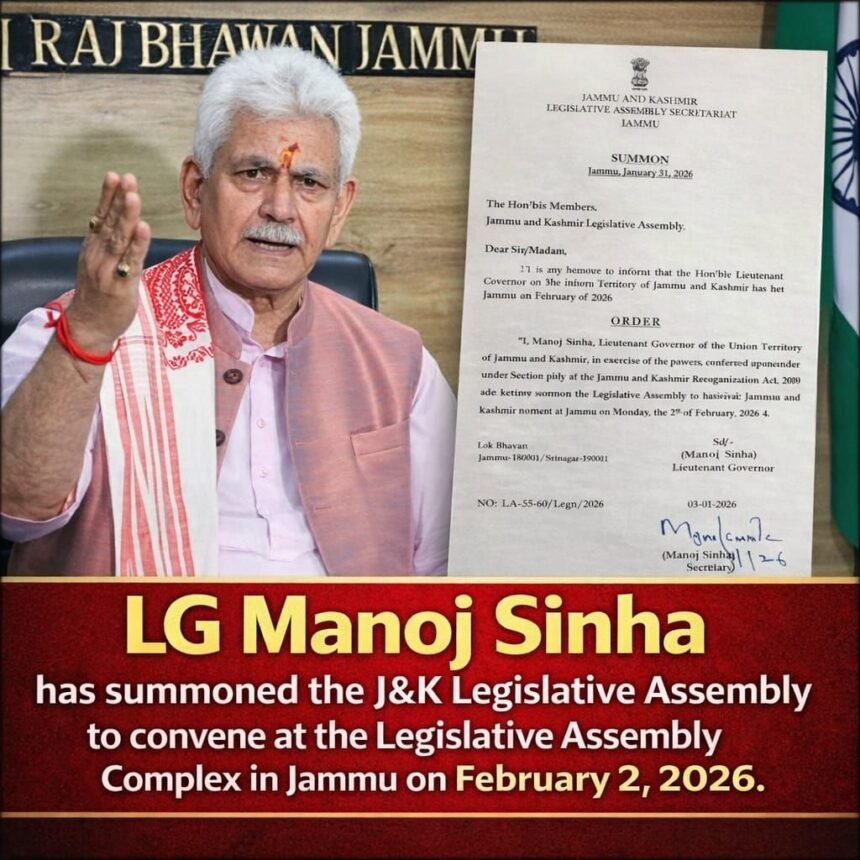
The Jammu and Kashmir (J&K) Legislative Assembly is all set to begin its two-part budget session on February 2, 2026. This crucial session will determine the financial direction of the region for the upcoming fiscal year. Focuses on essential sectors like infrastructure, development, and economic revival. The two-part session format has become a significant feature in recent years, allowing for deliberations on the financial allocations and key policy decisions for the Union Territory.
RBI Announced the Withdrawal of Rs 2,000 Notes, Sets Deadline for Exchange
The Significance of the J&K Budget Session
The budget session in J&K has always been an important event in the political calendar. But since the revocation of Article 370 in 2019, it holds even more significance. The changes brought about by the abrogation have altered the financial and administrative landscape of the region. made this budget session even more critical.
This two-part session offers the opportunity for detailed discussions and reviews of the financial proposals that will shape the future of Jammu and Kashmir. The session not only sets the course for fiscal policy but also influences key sectors such as infrastructure, healthcare, and education. Union Territory working to integrate itself into the national development framework. Also the session becomes a platform for the government to outline its financial priorities.
Focus Areas of the 2026 Budget
The 2026 J&K Budget will likely focus on several key areas that are critical to the region’s growth and development :
Infrastructure Development: With ongoing efforts to revamp J&K’s infrastructure, significant allocations are expected for road development and building smart cities. The Union Territory is aiming to enhance its connectivity with the rest of the country and ensure the successful implementation of high-profile projects like the Zojila Tunnel and Chenani-Sudhmahadev Road.
Economic Revival Post-COVID: The COVID-19 pandemic severely impacted the economy of J&K, particularly sectors like tourism, trade, and small businesses. The government is likely to announce relief packages and investment incentives to rejuvenate the economy. Tourism, one of the region’s primary revenue generators, will be a key focus, with proposals to attract more domestic and international tourists.
Youth Empowerment and Employment: The rising unemployment rate in the region, especially among the youth, is another critical issue that will be addressed. The budget may propose schemes for skill development, education, and support for entrepreneurship. With the recent emphasis on technology and digital literacy, there may be provisions for enhancing vocational training centers and supporting startups in the tech sector.
Security and Development in Border Areas: The border areas of Jammu and Kashmir continue to be sensitive due to security concerns. It is likely that the budget will include measures aimed at improving security infrastructure while also enhancing the living standards of people in these regions through development projects.
Two-Part Format: A Strategic Move
The two-part format of the budget session is designed to allow ample time for discussion and analysis. The first part typically focuses on the introduction of the budget, while the second part deals with more detailed examination, including debates and votes on financial proposals. This format ensures a transparent process, allowing legislators to closely scrutinize each proposal before finalizing allocations.
Challenges and Opportunities
While the J&K government has made significant strides since the region’s reorganization, several challenges remain. The region still faces political unrest, infrastructural gaps, and socio-economic disparities, which may hinder the full realization of the proposed budgetary allocations. Moreover, the implementation of national schemes in a region with a distinct socio-political landscape requires nuanced and locally adapted policies.
However, these challenges also present an opportunity for the government to design transformative policies. The budget can be used to implement long-term projects that focus on sustainable development, bridging the rural-urban divide, and fostering inclusivity.
The Role of Citizens and Stakeholders
As the two-part budget session unfolds, citizens, businesses, and civil society organizations in Jammu and Kashmir will have a vital role to play. Active engagement with policymakers, feedback on proposed schemes, and participation in regional development efforts can ensure that the budget’s benefits are fully realized.