


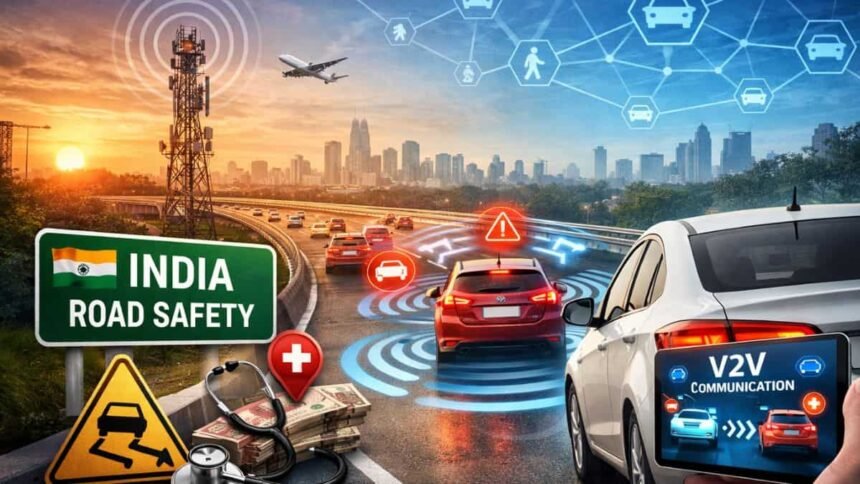
Imagine a car that can “talk” to other vehicles around it warning of potential crashes, traffic jams, or even slippery roads ahead. This is not science fiction anymore. The Indian government is taking steps to implement Vehicle-to-Vehicle (V2V) communication technology, a revolutionary system aimed at enhancing road safety and reducing traffic accidents across the country.
What is V2V Technology?
V2V technology allows vehicles to exchange information with each other in real-time. Using sensors, GPS, and wireless communication systems, cars can instantly share critical data like:
- Speed and direction of travel
- Sudden braking
- Road hazards
- Traffic congestion
This real-time exchange enables vehicles to anticipate potential dangers, alert drivers, and even take automatic preventive measures to avoid collisions. In essence, vehicles will be able to “talk” to each other, creating a safer driving ecosystem.
From Jabalpur to Asia: UWO’s AI Mall™️ MVP Signals a New Era of Simplified AI Adoption in India
Government’s Push for Safer Roads
According to the latest reports, the Ministry of Road Transport and Highways (MoRTH) is preparing to roll out V2V technology in India. The primary goal is to significantly reduce road accidents, which continue to claim thousands of lives each year.
The initiative is part of a larger plan to modernize India’s transportation system, incorporating smart vehicle technologies and promoting connected mobility solutions. With rising urban traffic and increasing vehicle numbers on roads, the government sees V2V as a key solution to prevent accidents and improve traffic management.
How V2V Will Work in India
Once deployed, V2V-enabled vehicles will communicate using dedicated short-range communication (DSRC) systems, allowing instant transmission of critical safety data. For example:
- If a car suddenly brakes on a busy highway, vehicles behind will receive alerts immediately.
- In case of black ice or slippery conditions, approaching vehicles can be notified in advance
- Emergency vehicles can broadcast their movement, allowing drivers to clear the path automatically.
Experts believe that even partial adoption of V2V technology could cut traffic collisions by up to 40%, as cars coordinate their movements and anticipate hazards faster than human reflexes.
Challenges Ahead
While the prospects are exciting, India faces several challenges in rolling out V2V:
- Infrastructure Readiness: Roads and traffic management systems need upgrades to support smart communication.
- Vehicle Compatibility: Older vehicles without V2V capabilities cannot communicate, so widespread adoption will take time.
- Cybersecurity Concerns: As cars exchange sensitive data, ensuring protection against hacking and misuse is critical.
Despite these hurdles, government officials remain optimistic that pilot projects in metro cities will pave the way for nationwide implementation.
The Road Ahead
The introduction of V2V technology marks a major leap toward smart mobility in India. Beyond reducing accidents, it has the potential to improve traffic flow, decrease congestion, and enhance driver awareness.
For consumers, this means safer commutes, fewer crashes, and an exciting glimpse into the future where vehicles are not just machines but intelligent partners on the road.
As India gears up for this innovation, one thing is clear: the roads of tomorrow will be smarter, safer, and more connected than ever before.