


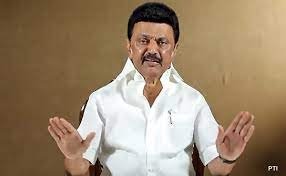
In a fervent rebuke against the Union Home Minister Amit Shah’s advocacy for greater Hindi acceptance. Tamil Nadu CM MK Stalin vehemently expressed his opposition Opposition to Greater Hindi acceptance asserting that the state would not succumb to the “imposition” of the language. The CM’s remarks came in response to Amit Shah’s statements during the 38th meeting of the Committee of Parliament on official language in New Delhi.
During the meeting, Amit Shah underscored the importance of greater Hindi acceptance. Urging its acceptance even if the pace is gradual.
He emphasis was on the fact that Hindi should not be seen as competing with other languages and that the nation’s strength will be fortified by the promotion all Indian languages.
However, these comments drew a swift and stern response from MK Stalin. H characterized Amit Shah’s stance as an “audacious push” for Hindi acceptance.
MK Stalin’s tweet on the matter
In a tweet that resonated widely, MK Stalin declared, “It’s a blatant attempt to subjugate non-Hindi speakers. Tamil Nadu rejects any form of Hindi hegemony and imposition. Our language and heritage define us – we won’t be enslaved by Hindi!”.
The Chief Minister’s words echo a longstanding sentiment in Tamil Nadu, where language has often been a touchstone of cultural identity and pride.
The Chief Minister further called upon Amit Shah to take note of the strong opposition to Hindi imposition in other states as well, including Karnataka and West Bengal.
He also warned against rekindling the sentiments of the “1965 Anti-Hindi Imposition Agitations,” which had been marked by widespread protests against perceived efforts to impose Hindi as the sole official language.
This exchange of opinions between MK Stalin and Amit Shah highlights the complex linguistic dynamics in India, a nation with a diverse linguistic landscape.
While Hindi is one of the country’s official languages and widely spoken, its promotion has at times sparked controversies and resistance, particularly in non-Hindi-speaking states.
Tamil Nadu has historically been at the forefront of asserting its linguistic identity, as evident from the aforementioned anti-Hindi protests in 1965 and other such instances in the past.
The sentiment transcends politics and resonates deeply with the people of the state. Especially as Tamilians have taken pride in preserving their unique language and culture.
As the discourse on language continues to evolve, the stand taken by MK Stalin and his strong words against the perceived imposition of Hindi underlines the significance of linguistic autonomy.
The tussle between national unity and regional identity remains an ongoing dialogue, reflecting the delicate balance India seeks to strike in respecting its myriad languages and cultures.